On this podcast, Luke, Shaun, Jamie and Ewan discuss serial killers. The fascination with true crime and serial killers seems to be growing endlessly and have a hold on a wider audience than ever. Like in the instance of poor Paul Krendler, Hannibal Lecter has direct access to our cortex and has set about consuming it in the most indelicate way. What does it mean that we are drawn to programmes about the lives of people whom (from most of us) we hope never to meet the likes of?
Author: ThePatterPod
This space is dedicated to the wide and varied interests and ignorances of our podcast collective, @ThePatterPod.
Categories
Serial Killers
It is Sunday afternoon, preferably before the war. The wife is already asleep in the armchair, and the children have been sent out for a nice long walk. You put your feet up on the sofa, settle your spectacles on your nose, and open the News of the World. Roast beef and Yorkshire, or roast pork and apple sauce, followed up by suet pudding and driven home, as it were, by a cup of mahogany-brown tea, have put you in just the right mood. Your pipe is drawing sweetly, the sofa cushions are soft underneath you, the fire is well alight, the air is warm and stagnant. In these blissful circumstances, what is it that you want to read about?
Naturally, about a murder.
– George Orwell
Categories
Culture Patter #4 – Aliens (Ep18)
All that cold blackness
-This time on the podcast, Shaun, Luke and Ewan discuss the likelihood of alien life and what it could mean for us.
Categories
Aliens

-This time on the podcast, Shaun, Luke and Ewan discuss the likelihood of alien life and what it could mean for us. Listen to our latest Culture Patter Podcast below or on all podcast platforms. – @ThePatterPod
What is out there beyond the stars of Hollywood in that military base in Nevada?
Is there a government cover-up of alien life, or are aliens a welcome cover-up used by government lifeforms?
What is there to find and are we certain we want to find it?
“No one would have believed in the last years of the nineteenth century that this world was being watched keenly and closely by intelligences greater than man’s and yet as mortal as his own; that as men busied themselves about their various concerns they were scrutinised and studied, perhaps almost as narrowly as a man with a microscope might scrutinise the transient creatures that swarm and multiply in a drop of water.” – War of The Worlds
Categories
Culture Patter #3 – Fear (Ep17)
In this episode of the Patter Podcast Jamie, Luke, Ewan and Shaun dissect ‘fear’ – what our phobias are rooted in, how they manifest and how they’ve evolved to reflect our changing times. We discuss why certain characters and tropes are revisited in the horror genre whilst asking if fear is innate or learned.
Categories
Fear
“Fear is primarily an emotion ‘about the body – its fleshiness and precariousness’. In its most basic form of sudden fright, fear ensues from the activation of the amygdala – a primitive part of the brain that modulates vigilance and arousal levels towards external stimuli, mobilizing the defence mechanism in the body before potential danger is fully cognitively assessed. However, fear is not merely an evolutionary response to a presumed threat. It is also a mental and cultural construct in which manifests in the interface of body and mind, self and other, consciousness and non-conscious. Fear is felt within, through and across physical, mental and cultural layers, implicating the body both as the internal reservoir or anxieties and as the external referent of apprehension towards others.”
– Historian Joanna Bourke
Categories
#AbolishTheMonarchy
By Shaun Forrest
My first memory of the Royal Family is from when I was four years old. Every day my dad would walk me to primary school from our flat on the high street, stopping at the newsagents on the way to buy his Sun Newspaper and 20 Lambert & Butler. This Monday morning was slightly different though, along with his paper and cigarettes my dad purchased a bunch of flowers. We left the shop and instead of turning left towards my school we went right towards the Linlithgow Cross, a large stone well that has stood outside the town’s Burgh Halls since 1807 and represents the centre of the town. My dad, a working-class man from Edinburgh, was in my eyes a tough man but he lay those flowers down that day with a tear in his eye just like the thousands before him who had put down bouquets and tributes. The date was September 1st, 1997, the morning after Princess Diana of Wales was murdered. At the time I didn’t understand what was going on and even now I’m still unsure why a working-class man from Edinburgh had such affection for a Princess that was in every way an opposite to him.
Fast forward 23 years, the world is watching another type of royal car crash. The son of Princess Diana, the Princess figuratively and literally hounded by the press, was now trying to save his own wife by working with them. Prince Harry has always been seen as the outsider. He always struck me as that young boy who was angry at the world but couldn’t do anything about it. A boy who had his mother ripped away from him and was made to stand by her coffin while the entire world watched. I would be angry too; I would want to run as far away from that life as possible, and finally he has. The wedding of Harry and Meghan was just another flex of the British Empire and the controversy surrounding it was a stark reminder we haven’t moved too far from those days of slavery. Because Meghan was a person of colour the media and households around the country were shocked and disappointed. Even the Royal Family themselves had to have a conversation about how dark the first-born child’s skin might be. This didn’t shock me, our oldest institutions are merely symbols of an Empire built upon genocide, slavery and colonialism.
The divide between The Royal Family and the common people of the country they rule is definitely growing wider and deeper with the idea that these people sitting on thrones are just another form of celebrity such as Oprah. Harry and Meghan’s interview was filmed against the beautiful sunlit backdrop of California where Oprah, Harry and Meghan all live on the same street. This was the meeting of British Monarchy and American Chat Show Royalty and, ultimately, they are found to be equally as hollow and meaningless.
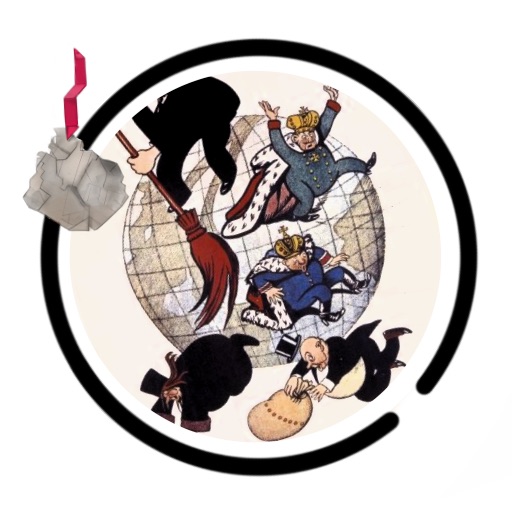
British Royalty and American chat show Royalty came together in a bizarre televised collaboration where Oprah let Harry and Meghan tell their side of why they had to flee Britain to the sunshine of California -which got Twitter trending #AbolishTheMonarchy. Luke, Jamie and Shaun discuss the issues raised in the interview, the current feeling towards the Royal Family and whether or not the Monarchy should continue. Let’s be honest, the Republic of Scotland does have a nice ring to it.
Jamie, Luke, Shaun and Ewan discuss artificial intelligence. We got together to speak about our understanding of how AI operates and what our cultural and practical experiences tell us about the future of AI. We discuss what artificial intelligence can do, what it cannot do, and just how sure we are of these limitations.
Categories
Artificial Intelligence
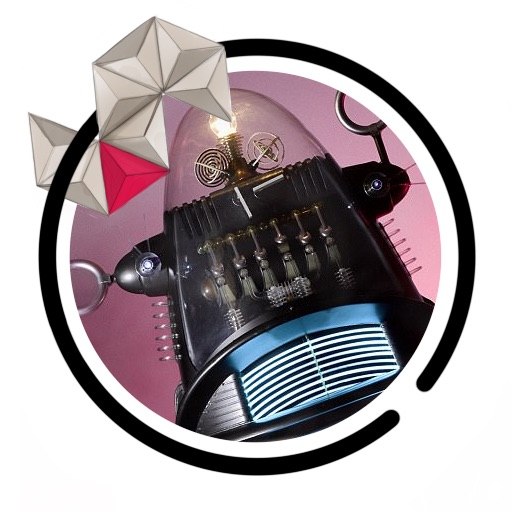
AI is all around us and we interact with it everyday in ways that we might not even realise. But still our concept of artificial intelligence often sits on two extremes. It oscillates between the subservient home-help robot of Rocky IV and the sentient and destructive robotics of the Terminator universe. Our real experiences show the home-help type of AI to still display frustrating short-comings (though who can be too critical of the ways in which our laziness is enabled?) and our fear that AI will one day turn on the human race arises surely from a subconscious guilt that there is plenty to justify a clear-thinking outsider being moved to quickly see us as the problem.
We discuss what AI can and cannot do -and just how sure we are of these distinctions- and also what AI can do for us.
 thepatterpod.com