What do we all have in common? Well for most of us it’s the Human Body. Coming in all shapes and sizes but internally we are mostly the same, some of us have stronger constitutions than others mind you. Luke, Shaun, Ewan and Jamie vouch for their favourite organs and discuss all the incredible wonders within us. Listen to our latest Current Patter Podcast below or on all major podcast platforms. – @ThePatterPod
Once the life-sustaining properties of flatulence were widely known, there were many social consequences. People who openly farted around others were no longer treated with disdain but with grudging respect. But contrastingly, farting lost a lot of its humorous associations, as people came to view a fart being made for comedic effect as a fart that could now not be used to save a life, as if the dispenser had just poured a litre of blood down the drain for a joke. Such things were deemed unacceptable. When the Red Cross adopted the phrase “Pull my finger” as the slogan for its campaign to increase donations of flatulence for disaster victims, a classic joke was essentially lost forever. – Dean Burnett
British Royalty and American chat show Royalty came together in a bizarre televised collaboration where Oprah let Harry and Meghan tell their side of why they had to flee Britain to the sunshine of California -which got Twitter trending #AbolishTheMonarchy. Luke, Jamie and Shaun discuss the issues raised in the interview, the current feeling towards the Royal Family and whether or not the Monarchy should continue. Let’s be honest, the Republic of Scotland does have a nice ring to it. You can find the latest Current Patter Podcast below or on all podcast platforms.
By Shaun Forrest
My first memory of the Royal Family is from when I was four years old. Every day my dad would walk me to primary school from our flat on the high street, stopping at the newsagents on the way to buy his Sun Newspaper and 20 Lambert & Butler. This Monday morning was slightly different though, along with his paper and cigarettes my dad purchased a bunch of flowers. We left the shop and instead of turning left towards my school we went right towards the Linlithgow Cross, a large stone well that has stood outside the town’s Burgh Halls since 1807 and represents the centre of the town. My dad, a working-class man from Edinburgh, was in my eyes a tough man but he lay those flowers down that day with a tear in his eye just like the thousands before him who had put down bouquets and tributes. The date was September 1st, 1997, the morning after Princess Diana of Wales was murdered. At the time I didn’t understand what was going on and even now I’m still unsure why a working-class man from Edinburgh had such affection for a Princess that was in every way an opposite to him.
Fast forward 23 years, the world is watching another type of royal car crash. The son of Princess Diana, the Princess figuratively and literally hounded by the press, was now trying to save his own wife by working with them. Prince Harry has always been seen as the outsider. He always struck me as that young boy who was angry at the world but couldn’t do anything about it. A boy who had his mother ripped away from him and was made to stand by her coffin while the entire world watched. I would be angry too; I would want to run as far away from that life as possible, and finally he has. The wedding of Harry and Meghan was just another flex of the British Empire and the controversy surrounding it was a stark reminder we haven’t moved too far from those days of slavery. Because Meghan was a person of colour the media and households around the country were shocked and disappointed. Even the Royal Family themselves had to have a conversation about how dark the first-born child’s skin might be. This didn’t shock me, our oldest institutions are merely symbols of an Empire built upon genocide, slavery and colonialism.
The divide between The Royal Family and the common people of the country they rule is definitely growing wider and deeper with the idea that these people sitting on thrones are just another form of celebrity such as Oprah. Harry and Meghan’s interview was filmed against the beautiful sunlit backdrop of California where Oprah, Harry and Meghan all live on the same street. This was the meeting of British Monarchy and American Chat Show Royalty and, ultimately, they are found to be equally as hollow and meaningless.
Luke, Ewan, Jamie and Shaun talk about the groundbreaking, generation defining reality show that is Jackass. Culture change, the dangers of fame and obviously our favourite stunts. You can find the latest Current Patter Podcast below or on all podcast platforms – @ThePatterPod
By Shaun Forrest
The Millennium had passed with the world not imploding and the Y2K scare did not come to fruition, what was going to lead the way for this new generation of content-hungry Millennials?
“Hi, I’m Johnny Knoxville, welcome to Jackass!”
The 21st century started fast with a wave of new media and culture for teenagers. The PlayStation2 had been released, arguably transforming the gaming world forever. Alternative rock bands like Linkin Park, Korn, Limp Bizkit and System of a Down created ‘NU Metal’ harmonising with the breakthrough mainstream pastime of skateboarding that had grown so popular through the 90’s. Baggy jeans, hoodies and skate shoes that were once the underground fashion had become mainstream with brands like DC, Etnies and Vans. This could fittingly be described as the MTV Era of pop culture and MTV had the perfect new reality television show unlike any other.
Jackass first hit our screens in October 2000. It opened with the iconic theme tune Corona by Minutemen and the shows fearless-leader Johnny Knoxville trying to drop into a vertical half pipe but ending up with a faceful of floor. A parental advisory warning was all the encouragement we rebellious teens needed to become obsessed with this new band of free-wheeling daredevils who had managed to turn after-school stunts and hooliganism into a career. Was this the beginning of true content creating and the new rock and roll? The show was nothing like we had seen before and, simultaneously, everything we wanted It to be. It was funny, dangerous, and controversial, with a big “fuck you” to the older generation -albeit the softer targets of mainly mothers, fathers and teachers.
The group of trailblazers were mainly skateboarders and all in their early to mid-twenties when the show propelled them into stardom. Loved by teens and hated by parents was the selling-point and the group played up to this rogue persona which unfortunately led to the familiar story of young stars drifting from any semblance of a stable or sustainable lifestyle. The partying, carefree lifestyle also came with alcohol, drugs, sex and ultimately addiction. MTV can be applauded for giving shows like Jackass their platform but must take some responsibility for not fully supporting the young group, instead they encouraged Dave England to eat his very own vomit-omelette.
“If your gonna be dumb, you gotta be tough”– By Roger Alan Wade
Quasi-stuntmen being paid to make everything into content while putting their bodies and health on the line for a gag was only going to end in tears. Jackass ran for a short 25 episodes but created numerous spin-offs and is about to release its fourth feature film but, unfortunately, not all the main cast will be involved. The youngest and arguably most popular member, Bam ‘Dad-Slapping’ Margera, has been cut from the film due to breaking the onset sobriety rules. Bam has since created a public shitstorm and claimed he will be making his own film in memory of his best friend, the late Ryan Dunn.
Perhaps if this sobriety rule had been implemented in the early days, we wouldn’t have received the same ground-breaking content but I’m certain at least one life would have been saved and far fewer would have been admitted into rehabilitation. But where is the fun in that?
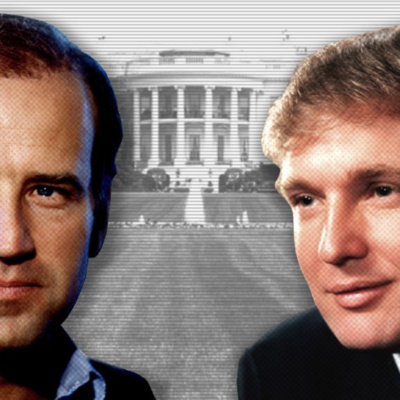
Well it has actually happened, Trump has left the building. We take a look back at the outrages few weeks on the lead up to President Biden’s inauguration and the calm after the storm. You can find the latest Current Patter Podcast below or on all podcast platforms – @ThePatterPod
Don’t read this half-baked pish. Listen to the pod! A Smudged Picture of Capitol Hill
By Ewan Maguire
Democracy insists upon participation and democracy must take to heart the noise of those who cry out against real and perceived oppression. At first It really should take these two protestations to heart to the same degree. To real oppression it owes a righting of wrongs, a plan and a progression towards justice (in reality this process can be slow-moving, many instances taking generations, lifetimes or still, to this day, enduring). To perceived oppression it owes an explanation, a demonstration of facts and counterchecks. But what to do if this explanation is not accepted, is not believed, or is ignored?
If a small faction does not accept an explanation, or forgoes it all together, they might be ignored with the belief that they will gutter and extinguish from lack of oxygen. If a large and violent faction are unsatisfied or further provoked by an explanation, another tact must be taken. It feels, at least during this scenario, that either the protest will not go out by itself, or, for that matter, cannot be left to go out by itself because of the possible damage caused in the process. Retaliative violence is not condonable, nor is it productive. So, how do you convince earnest people that they have misplaced their convictions?
A leader’s mea culpa might sway some. But then a leader often becomes a representation, forged early -an idea that can outlast the real utterances and behaviour of the person. A leader’s retraction is always in danger of being seen as a betrayal by that person of the ideal of the representation.
The trench-deep question remains of what this representation means to those who vaingloriously wave it as a flag and feel led by it to the steps of Capitol Hill. Has a real resonance moved between people who want something constructive, who stand for something that constitutes a betterment? I hear no solidarity for working people, no discernible manifesto. What I do hear is anger and ignorance and nothing else in earnest. Besides these, there may be no other convictions to contend with here.
***
I feel torn over writing that last sentence. I feel a slight guilt for judging those who are not the conscientious and calculating members of this patchwork movement that saw Trump for what he could be made into: a half-empty route through which their paranoid ideology could travel from rickets-inducing bedroom-obscurity to national conversation. Beyond the anger and behind the hysteria, there might be questions people want answered and issues they feel impotent to influence.
What has to go so wrong to enable a fertile ground for conspiracy and enraged fantasy? Are critics guilty of oversimplifying and lacking a desire to understand where this swelling comes from? If this phenomenon can be understood, and we are not wasting our time by trying to make sure Hannibal Lecter understands what he did wrong, I cannot see any underlying issues being addressed if they remain manifested in an impenetrable cloud of conspiracy and aimless malcontent. It may fall to those who feel a visceral disagreement with the most visible elements of this movement to investigate if anything coherent can be made out of the tumult.
Separately, for those working-class Americans who saw Trump as a means to gain attention unforthcoming from the wilfully amnesic administrations of the past, sympathy must be felt and an overdue righting of wrongs must be made.
Part two of our two-part take on Trump’s presidency and Biden’s inauguration.
Has Tik-Tok become our Covid collaboration? A young Scottish man has taken over the world by resurrecting the old tradition of a singing sea shanty. You can find the latest Current Patter Podcast below or on all podcast platforms – @ThePatterPod
The Appeal of the Anachronistic, Neo-medievalism & Resurrected Sea Shanties
By Jamie Watt
The more society is unsettled by The Now, the more the future seems opaque and uncertain – then humanity will increasingly return to the visual language, narratives and values of the past.
We observed this at the turn of the Millennium. As the spectre of Y2K floated in our collective consciousness, the optimistic anticipation of the 21st Century quickly waned and turned to trepidation, as we began to ask ‘what unprocessable horrors lurk in the shadows of The New?’ A kind of Techno-Gothic became the pervading aesthetic as films like The Matrix channelled our insecurities and fears surrounding humankind’s relationship with emerging technologies.
The reality wasn’t as cataclysmic as the Matrix depicted but was a longshot from the utopian portrayals of 21st Century life as seen in Atomic era fiction like Lost in Space and the Jetsons. Rather, a digital malaise took hold. The Computer, once synonymous with technological wonderment became, for many, a symbol of office drudgery and uninspiring work environments. Despite being increasingly ‘connected’ via the rapidly expanding internet, early 21st Century workers felt isolated, alone in a matrix of office cubicles surrounded by the cold sterility of desktop devices.
Instead of looking to technology or the future for remedies, people turned to the past.
Medieval cosplay and role-playing events became increasingly popular as disenchanted office workers rejected modern technology (at least for the weekend) and found escapism in feudalism. They clad themselves in leather tunics, and attended historical reenactments or ‘Renaissance Pleasure Carnivals’, trading the plastic computer keyboard for a hand-crafted wooden tankard, overflowing with mead. ‘Neo-medievalism’, the preoccupation with the Middle-Ages, permeated pop-culture with films like Shrek and The Lord of the Rings ruling the box office in 2001. Likewise, turn-of-the-millennium computer games such as Age of Empires and Diablo adopted an anachronistic mise-en-scene. Those who felt undervalued, as replaceable cogs in the corporate machine, could play out their fantasies as legendary knights or revered wizards in sprawling Medieval worlds.
Jump forward twenty years, in the midst of the COVID-19 pandemic, a similar cultural phenomenon has occurred. Millennials and Gen Z have resurrected a 200-year-old sea shanty, returning to the folklore of the past to make sense of these perilous times.
A rendition of the early 19th century sailor’s song ‘The Wellerman’ by Airdrie postie, Nathan Evans went viral on Tik-Tok recently, racking up millions of views around the world and taking an older version of the song to the top of the global charts. The ballad tells the tale of life aboard a whaling vessel.
It’s ironic that during a 21st Century plague, when our only path to normality is via cutting-edge epidemiological breakthroughs, that so many should find comfort in the pre-industrial sea shanty. Why do we look for comfort and meaning in the anachronistic at time of crisis? Discussing Neo-medievalism, Umberto Eco argued it is because many of the structures that define the Western world; modern languages, cities and economies have their roots in the Middle-Ages. We look back to their origins to chart their evolution, to identify where the faults in our modern institutions lie, a kind re-assessing/ trouble-shooting exercise. The more disillusioned we are with the contemporary word the more we will seek solace in the past, security in the old.
During this pandemic, as we struggle with social isolation and economic uncertainty, we’re looking to epochs that conjure a sense of harmony and spiritual unity. A song about a whaling ship, an environment of order and discipline, where every shipmate had an essential role to fulfil and was valued, perhaps resonates with Tik-Tok’s demographic: A young audience of zero-hour contract holders at the mercy of precarious gig economy, who’ve been hit hardest by the economic fallout of COVID-19. John Archer, a folk singer from New Zealand, claims the success of the song is down to the similarities with the young whalers’ situation some 200 years ago and young people today, facing an uncertain future: The shared sense of being lost at sea, as the frenzied COVID-whale pulls us through the dark water. The appeal of the decisive sea captain mentioned in the song at a time when contemporary leaders appear inept, may also help to explain the songs popularity.
Tok-Tok enables its users to edit any video, letting those around the world to add instrumentation, sing along and harmonise with Evans’ original acapella video. The result is a piece of constantly evolving media that conveys a sense of community and solidarity in turbulent times.
This week on the podcast we sat down to talk about Covid-19 particularly, we wanted to address some of the conspiracy shite we had heard on Covid-denier/anti-lockdown pages. From even a cursory glance it became quite clear that they were deeply connected; to be against the lockdown had its irrational justification in denying the severity of the Covid crisis. They go hand-in grubby hand, if covid is nothing but a bad flu then this lockdown is clearly motivated by a far greater, far more sinister plan. Covid, as they have it, is simply the excuse scheming governments have been waiting for to bring about their totalitarian takeover. And, look at us now, caught in the twisting whirlpool of disorder meant crush the free-spirited among us and to make way for total commuinist domination!
We could go through their claims systematically and expose each one to the harsh light of science but, there’s a problem with that. Conspiracy loons are not swayed by evidence. There is no evidence that can overturn what they’ve decided to believe when, in fact, they are performing a much more impressive act of intellectual dishonesty.


 thepatterpod.com