Sleep is something we all need, or do we? This week Luke, Ewan, Jamie and Shaun talk all things sleep. We discuss our own personal experiences with sleep, from bedtime rituals to unusual dreams before comparing different species sleep patterns. You can find our latest Social Patter Pod below or on all major Podcast platforms. – @ ThePatterPod
By Ewan Maguire
Sleep is a mystery. We are unsure why it is necessary, but it is essential. Without it, each of our organs deteriorates in its levels of function and our minds cloud.
Edgar Allen Poe said of sleep, “those little slices of death, how I loathe them”. R.D Laing, on treating an insomniac patient, asked her to reframe her nocturnal struggle, “most of us sleep through a third of our lifetime, think of the extra life you have to lead”. Life-embracing thoughts. However, for those of us who find ourselves awake while others sleep, savouring these extra moments of consciousness is not the natural reaction. The natural reaction is to turn, toss, clench, writhe, and yearn for that gradually sudden drop off.
Sleep Hygiene is the area of study and practice that looks to promote the best in sleeping techniques. Have a comfortable, calming bedroom and a bed in which you do nothing but sleep and have sex (if you are so lucky); avoid screens for at least an hour before getting down to it; stay away from caffeine, cigarettes and alcohol; make time for relaxation before getting between the sheets; do not exercise within two hours of your bedtime; and, go to bed and wake up at the same hour, every day.
I like sleeping, I seem to need it, and I don’t get enough of it. But I do still lose a significant portion of my conscious life to it, and it seems the way to improve my quality of slumber is to let considerations of it creep into the way I live my day. One conclusion seems to hold up: most modern lives are lived in a way that is not very amenable to a good sleeping habit, and often that is not the fault of the individual but the circumstances erected around them.
And, of course, there is a hierarchy of needs going on here: if we were starving and unsheltered, we would not have the inclination to stress or devote as much thought to sleep. Still, for those of us with roofs, full bellies, and beds that are lain in more than slept in, we can start to loathe those little slices of death. Not for their imposition but for their absence.
Repent! This week on the patter pod we cast our leery eyes over the Seven Deadly Sins and decide gluttony is best. Luke, Ewan, Jamie and Shaun discuss the seven deadly sins that are believed to be the seven vices that spur other sins and further immoral behaviours. We cover each sin individually while thinking about how these ancient guidelines look in our modern day world and how some sins have developed over time. Listen to our latest Social Patter podcast below or on all major podcast platforms. – @ThePatterPod
With our increasing dependency on connecting through our advancing devices, are they bringing us together – or ripping us apart.
When the seven deadly sins were first constructed by the ancient Greco-Romans to give guidance on how people should live I can’t imagine they would ever have foreseen the relevance they still hold in a modern world, or worryingly how we now have an app for every sin.
Jamie, Luke, Shaun and Ewan discuss artificial intelligence. We got together to speak about our understanding of how AI operates and what our cultural and practical experiences tell us about the future of AI. We discuss what artificial intelligence can do, what it cannot do, and just how sure we are of these limitations. Listen to our latest Social Patter Podcast below or on all podcast platforms – @ThePatterPod
AI is all around us and we interact with it everyday in ways that we might not even realise. But still our concept of artificial intelligence often sits on two extremes. It oscillates between the subservient home-help robot of Rocky IV and the sentient and destructive robotics of the Terminator universe. Our real experiences show the home-help type of AI to still display frustrating short-comings (though who can be too critical of the ways in which our laziness is enabled?) and our fear that AI will one day turn on the human race arises surely from a subconscious guilt that there is plenty to justify a clear-thinking outsider being moved to quickly see us as the problem.
We discuss what AI can and cannot do -and just how sure we are of these distinctions- and also what AI can do for us.
Ewan was joined by Paddy to discuss his experience with the benefit system over the years and whether (a hypothesis dripping with hope) the Covid-19 pandemic might lead to some positive changes to the system. Listen to our latest Social Patter Podcast below or on all podcast platforms – @ThePatterPod
During an email exchange with Paddy, I first heard the idea floated that some people were beginning to feel a sense of solidarity growing from Covid-19. For those living lives that are often under the pressure of financial insecurity and unstable employment opportunities, it might feel as though only now, during this pandemic, is wider society becoming accustomed to the travails of their everyday lives. If we could go back and forgo the suffering of all those who this pandemic has affected, no one would do otherwise. However, now that this virus has wrapped itself around our society, what positive change, if any, can this bring?
Luke, Ewan, Jamie and Shaun talk about the cheerful subject that is death, discussing the idea of an afterlife, ancient burials and the death design concept. But don’t panic all the discussions on this pod are light-hearted and might even be considered funny and entertaining – or so we hope. If you are someone who is not comfortable hearing or talking about death we feel this episode might not be for you and that’s ok. “Life is a sexually transmitted disease with a 100% mortality rate”, R.D Laing said that and some people find the thought absurdly intriguing, others find it disturbing -we think most probably pinball between the two.
This week on The Patter Pod we’re discussing an emotionally loaded topic that for some will simply sound like a harsh condemnation of their lifestyle choices. We’re talking about PETS. At a time when pet ownership is more popular then ever we need to address the pertinent but often over-shadowed questions concerning both the ethical and environmental consequences of keeping animals. We can’t ignore the fact that people love their pets any more than we can suppose there won’t be found lurking in the mind of every excessively doting pet-owner their very own ego-obsessed, Joe Exotic.
Luke, Jamie, Ewan and Shaun dissect the topic with contributions from our Twitter audience.
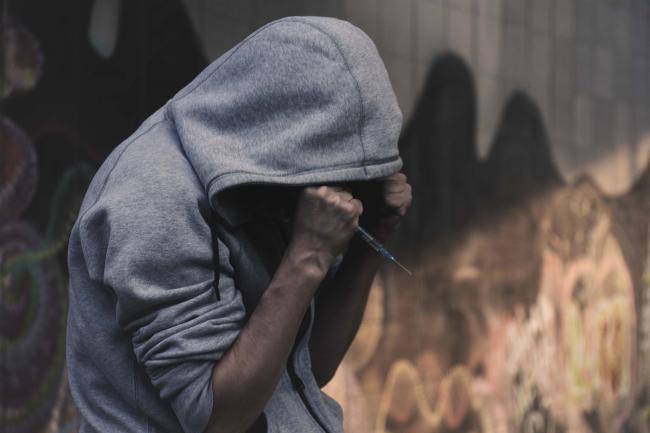
The Scottish Government released the 2019 Drug Death statistics for Scotland which has again pushed our country further ahead which actually means horrendously behind every other European country. We discuss the potential cause for Scotlands addiction, the governments social mistakes and what could decriminalisation look like?
You can find the latest Social Patter Podcast below or on all podcast platforms – @ThePatterPod
By Shaun Forrest & Ewan Maguire
During a time of uncertainty, isolation and the ‘new normal’ Scotland released what has become the ‘too normal’ statistic that drug deaths around the country have risen again. In 2019 the recorded drug related deaths were 1,264 a six percent rise from 2018 and double the number of deaths from 2014.
The root of Scotland’s drug addiction comes from Scotland’s poverty issue, the harsh deindustrialisation of the late 70’s that forced our communities into unemployment is not just a coincidence. The working men of our council estates would turn to alcohol and drugs to ease the daily pressure of being dragged down by the system they can’t control. Thatcherism increased our unemployment rates across the country to 12.9% leaving no real prospect for the new generation who are being born into poverty.
The majority of addiction in Scotland right now is from people who have battled addiction for over 20 years, children born into a broken Scotland that haven’t been given the correct tools or guidance, forgotten about or locked away. The majority of deaths have come from these people relapsing because for one reason or another the support they may have received just wasn’t enough.
Countries across the world have decriminalised drugs, this idea in Scotland has been backed by the SNP with a proposal for safe spaces where addicts can at least take drugs in a safe environment, but Westminster again knocked the proposal back. The older generations may still believe the ‘War on Drugs’ is the appropriate response but surely it is time to understand our past mistakes. Drug addiction and death hasn’t always been treated as a health issue, but it is far broader than that, it is a social and economic issue also. If we can’t financially support our working-class communities to survive, give them opportunities in education, teach the fundamentals, or create something for people to do, then why are we so shocked they turn to drug use. I’ve heard it all my life that youths hanging around streets are trouble but yet we still have nowhere for them to go, nowhere for lower income children to engage with professional role models, creating an environment that education and creativity is encouraged or normalised.
Decriminalisation doesn’t mean legalisation; it doesn’t mean people will run out and start taking drugs. Instead of people being put in prison they will be given the opportunity to recover from their addiction. In prison people are given help and support from professional addiction workers, nurses, mental health specialists and prison officers. A structure and routine are created to best suit the individual giving them the ability to manage their issues before being released. Unfortunately, the same care doesn’t continue when they are back into the community due to underfunding. It is ultimately easier to manage a recovery program in a controlled prison environment but without proper funding it will all be for nothing long term. But if someone wasn’t sentenced to prison for 12 months but instead given the correct support what might it look like. The average cost of keeping someone in prison for 12 months is £30,000 which works out to £576.93 a week but outside of prison the same person receives £102 a week. In prison people are given the opportunity of rehabilitation, recovering from drugs, given a job within the prison that could result in a Scottish Vocational Qualification (SVQ). Facilities to exercise with instructors, education, social workers and not forgetting three meals a day.
The question is not why is prison so good at dealing with the issue, it is why is our support in the community so bad?
*** I work in a community rehab offering support to those struggling with alcohol and drug issues. It is not an abstinence-based service but rather is centred around each individual’s goals (although these goals can be complete abstinence). It puts no prescriptive expectations on people beyond a desire on their part to cut down use and make improvements through structured engagement. Working within addiction services you are faced each day with the reach and limitations of the support you can offer to people. Although the person themselves must do the hard work of achieving and maintaining their desired end, we are there to offer education, intervention, community inclusion, the facilitation of peer-support, and groups that address common difficulties and new coping strategies.
At points the job consists of fire-fighting, or “crisis management”. At these times, the importance of setting out a structured programme for individuals based on their own requirements and the strengthening of resolve and readiness must be put secondary to immediate intervention. I think this aspect of the job will not strike anyone as surprising. But what people might be less familiar with is what work is done when someone is stable and in a secure enough position to work on their “Recovery”. Even this term might be unfamiliar to some. It is the standard term for the condition of those who are actively pursuing a life free from addiction. The connotation it carries of continual work, rehabilitation and precariousness are important; but so are the connotations of creation and hope.
Those embarking on recovery can start that journey at a low point. Hospitalisation, ostracisation from partners or family, overdose attempts, or a slow and bleak realisation of the misery now attendant upon them. Some walk away before “rock-bottom” but others only resolve to change when faced with physical and mental self-destruction as an alternative. At whatever point they enter recovery, people invariably require help to build up self-worth and self-belief they have lost or may never have had. Alongside this, people benefit from exploring why addiction has affected their life and through what means the addiction has come to possess the strength that it does. Through these means, individuals can come to better understand how they came to be where they are and how to move progressively further from a way of life they no longer wish to lead.
This disentanglement of cause and effect, both in terms of personal background and day-to-day behaviour, allows an informed and personalised plan to emerge -a plan that may need repeated revision. This plan can be a way out of old, entrenched behaviours. This process can go further and this disentanglement, for those who are able to go through it, can also point to a general or specific cause, often a number of them. For some, counselling and difficult self-reflection can start to allow them some form of healing. For others, this cannot be achieved and they might learn to grow around past events. Others still remain plagued by them or unable to conceive of a life outside of addiction. For these people, a reactive approach to addiction is not enough; some early preventative measure was the only chance they stood.
At this point, our society is failing to identify and target at risk populations with early preventative measures. These substances are addictive. If you are moved to take them repeatedly to counteract trauma, poor mental health, or any issue you feel unable and unequipped to deal with, addiction will ensue. And when addiction appears, no one can foresee where things end.





 thepatterpod.com